



Some Christmas gifts become part of everyday life long after the wrapping is gone. A wooden cross near a doorway, a familiar verse on a wall or a figure on a prayer shelf can carry that kind of meaning. The important question is whether the piece belongs in the recipient’s home and devotional practice.
This guide to Christian Christmas gift ideas starts with the person you are buying for. Their tradition, taste and available space should shape your choice more than the size of the present.
For someone who appreciates simplicity: a wooden cross
A plain cross can be a good starting point when you know the household already displays one. Look at the proportions, wood finish and hanging method. A cross that appears modest on a product page may be quite noticeable beside a small doorway.
The 30 cm wooden wall cross provides a concrete size to compare with the intended wall. Ask about its installed weight and mounting requirements. If the recipient rents, they may want to choose the fixing position themselves.
Remember that a plain cross and a crucifix are different presentations. Do not assume they are interchangeable for every recipient simply because both are Christian gifts.
For a reader who loves familiar words: verse wall art
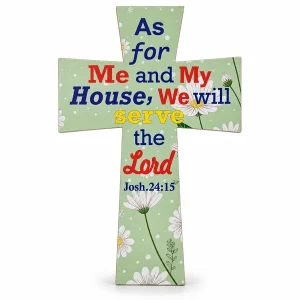
A verse-based piece works best when the wording is meaningful to its owner. Read the complete text and check the translation, punctuation and design before buying. A visually attractive print is less useful if the letters are too small to read from the sofa.
You can explore the Christian wall art collection and compare it with the Hope, Grace, Peace and Joy wall hanging. Use the actual listing images to check the wording. If a detail is unclear, request a closer photograph.
For an established prayer shelf: a devotional figure
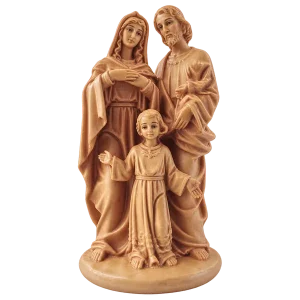
A figure is a more specific choice. Check what the recipient already keeps in their prayer space and whether they welcome that particular devotional image. A photograph of the existing shelf can help you judge scale and colour without guessing.
The small resin Jesus figure and the Makrana marble Sacred Heart statue are different kinds of purchase. Compare dimensions, weight, material and base footprint. Marble may require more planning for delivery and placement; resin should not automatically be treated as unbreakable.
Make the gift easy to receive
Think through the practical part before wrapping. Will someone need to drill a wall? Is there a stable surface available? Can the recipient lift and move the item comfortably? A short note with the care instructions and product information can be more helpful than an extra decorative accessory.
For a gift sent directly, confirm the delivery address and arrangements with the buyer’s consent. Check the current returns policy and ask about gift packaging rather than assuming either service is available for every item. Keep order details accessible in case the recipient needs assistance.
Let the occasion guide the message
Wikipedia’s overview of Christmas gives background on its religious and cultural observance. Your gift note can stay personal: why the wording reminded you of the recipient, or why the material suits their home. There is no need to promise that an object will bring protection or change their circumstances.
Browse the Christian collection with one clear brief: a welcome devotional image, a suitable size and a finish the recipient will enjoy. If two options remain, send the links and let them choose. That small conversation often produces a better gift than a confident guess.
Frequently asked questions
Is a cross suitable for every Christian household?
Preferences differ between households and traditions. Check whether the recipient prefers a plain cross, a crucifix, another devotional image or no decorative religious objects.
What should I check before gifting a marble statue?
Confirm the dimensions, weight, stable display surface and delivery access. Ask about packing and care for the selected statue before ordering.
Can I buy verse wall art without knowing the recipient’s favourite verse?
You can ask them or someone close to them. Read the complete wording and translation first; personal relevance matters more than choosing a popular phrase.