


Choosing Islamic wall art starts with three practical questions: what would you like the piece to express, where will it hang, and how much space do you have? A design that looks impressive in a product photograph may feel very different above your own sofa or beside a small reading chair.
This guide helps you compare Arabic calligraphy wall decor by size, material, colour and placement. Whether you are furnishing a living room, creating a quiet prayer corner or choosing a housewarming gift, the aim is to find a piece that fits both the room and the people who use it.
1. Start with the meaning and the design
Decide which text or visual style you want before comparing finishes. You might be looking for an Ayatul Kursi design, an Asmaul Husna composition, a short calligraphic phrase or a pattern-led piece. These are different choices, so check the product name and close-up photographs rather than assuming that every Arabic design contains the same text.
Calligraphy has a long history as both writing and ornament. The Metropolitan Museum of Art explains that its decorative forms still serve to communicate text. That is a useful buying principle: appreciate the composition, then check the inscription. Read more in the museum’s introduction to calligraphy in Islamic art.
If reading the inscription matters to you, request a clear close-up and confirm the wording before ordering. A complex arrangement may look striking across the room while being harder to read from a distance. Choose the balance of visual detail and readability that suits your purpose.
2. Measure the wall before choosing a size
Measure the usable wall area, including the space between windows, shelves, switches and door frames. For a design above furniture, measure the furniture too. This gives you a more useful reference than the overall room size.
Use removable paper or low-tack tape, tested on an inconspicuous area first, to outline the proposed dimensions. Look at the outline from the doorway and from your normal seated position. This quick check helps reveal whether the piece will feel too small, too wide or crowded by nearby objects.
A practical example: above a 180 cm sofa, you could test a 120 cm-wide outline as an initial styling idea. Compare it with a smaller outline before deciding. This is a starting point, not a fixed rule: a detailed round panel and a wide multi-piece arrangement can have very different visual weight.
Read dimensions carefully. With sets, confirm whether the measurement describes each panel or the complete arrangement, and whether gaps between pieces are included. With framed pieces, check whether the size includes the outer frame.
3. Compare metal, fabric and framed wall decor
Metal wall art
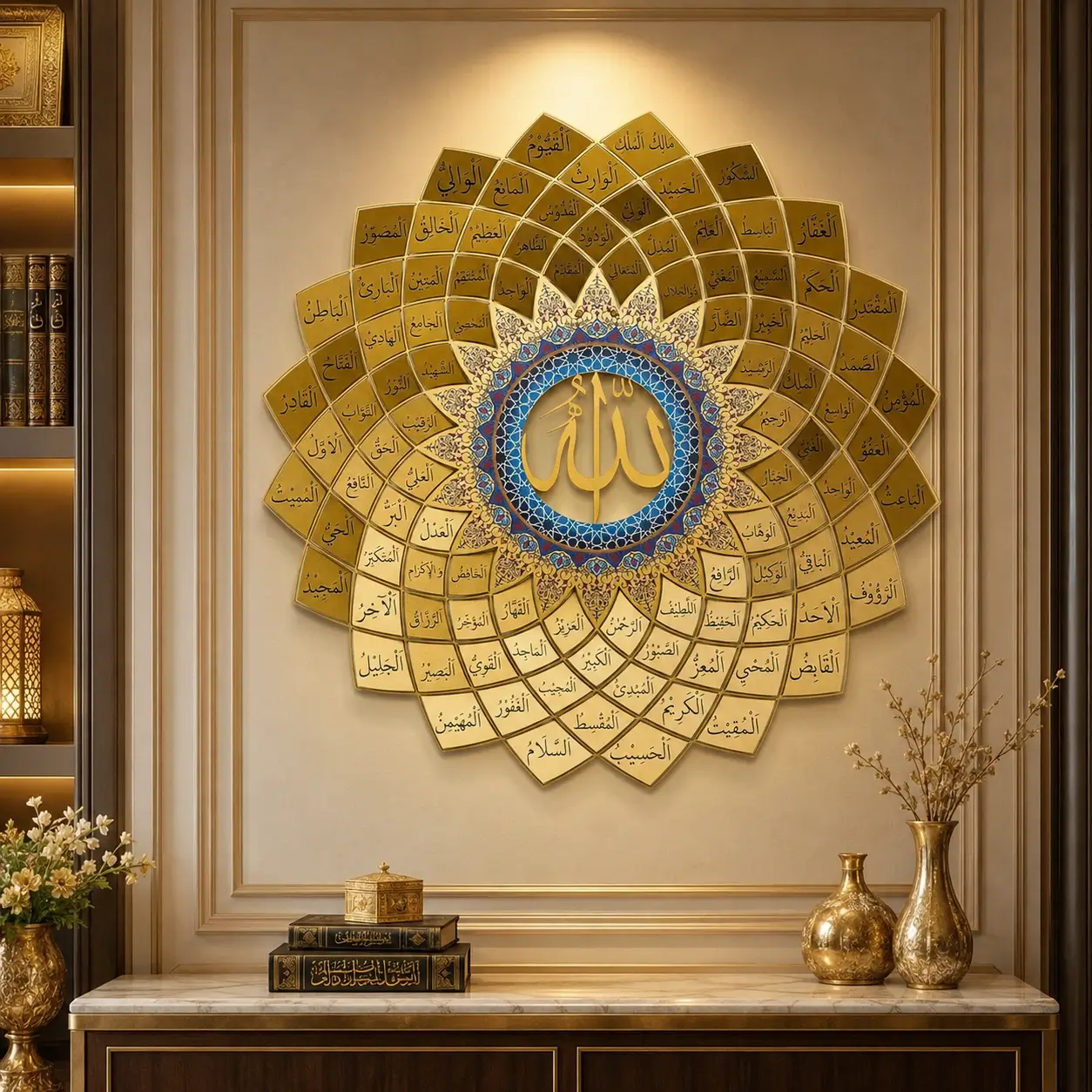
Metal designs can create a clear silhouette against a plain wall. Openwork calligraphy may also cast shadows, depending on the mounting depth and lighting. Before buying, check the actual material, finish, weight and hanging method. A metallic colour in a photograph does not, by itself, tell you how the piece is made.
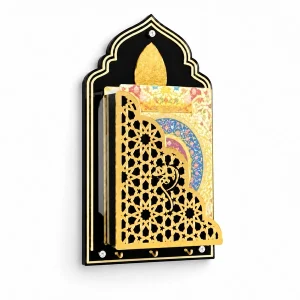
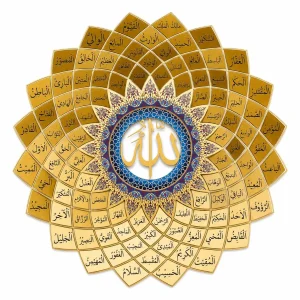
For a product to compare, explore the 3D Metal 99 Names of Allah wall art. Use the selected product details to confirm the version you want, especially when photographs show more than one colour or size.
Fabric wall hangings
Fabric offers a different look, with texture and decorative borders that can suit a layered interior. Check how the hanging is supported, whether a rod or other fittings are included, and what care instructions apply. Do not assume a decorative textile can be machine washed.
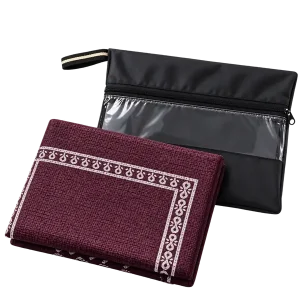
You can compare this format with the White Space Ayatul Kursi fabric wall hanging. Consider how its overall shape and border would sit alongside your curtains, rug and other textiles.
Framed prints and other formats
When considering a framed design, look at the frame depth, glazing and total weight. Reflections may affect visibility near a bright window. For any format, the most useful comparison is the complete installed piece: artwork, frame or support, and the hardware needed for your wall.
4. Match the finish to your room
Begin with colours already present in the space. Warm metallic tones can echo brass accessories or warm wood; dark finishes can provide contrast against pale walls; lighter designs may sit more quietly within a neutral room. These are styling options rather than rules.
Check contrast as well as colour. Fine lettering can disappear against a busy wallpaper or a very similar wall shade. If you want the calligraphy to stand out, a simpler background may make the shape easier to appreciate.
View the wall in daylight and after your lamps are switched on. A reflective finish may appear brighter under a spotlight, while a textured surface may look more subdued. Product photography and screen settings can affect colour, so ask for another photograph if the exact tone is important.
5. Plan placement around everyday use
Living room: choose one main focal point above a sofa, console or clear section of wall. Give the design enough surrounding space to be seen comfortably. If the room already contains a large mirror or a patterned feature wall, test whether another prominent piece makes the area feel crowded.
Prayer corner: keep the practical use of the space in mind. Leave room for movement, storage and your prayer essentials. Place artwork where it suits your household’s preferences and where it will not compete with the activities for which the area is intended.
Hallway or entrance: check door swings and the route people use when carrying bags or moving furniture. A piece that projects from the wall needs enough clearance. In a narrow passage, a compact arrangement may be easier to accommodate than a wide set.
Bedroom or home office: consider the view from the bed or desk. You may prefer a quieter composition here, especially if the room already contains shelves, framed photographs or patterned furnishings.
6. Check mounting and care before ordering
Confirm the item’s weight and the type of fixing it requires. Brick, concrete, plasterboard and tiled surfaces need different approaches. Use fittings suitable for both the wall and the load, following the artwork and fixing manufacturers’ instructions. If you are unsure about the wall construction, ask an installer.
Do not assume adhesive strips are suitable simply because the design looks lightweight. Check the product guidance, the fixing’s rating and its surface requirements. For a rented home, consider installation restrictions before choosing a large or heavy piece.
For ongoing care, follow the instructions for the specific material and finish. Avoid experimenting with metal polish, abrasive pads or household sprays on an unfamiliar coating. Choose a location that meets the seller’s indoor or outdoor use guidance, and keep access for occasional cleaning in mind.
7. Choose Islamic wall art as a thoughtful gift
For a housewarming, wedding or Eid gift, start with the recipient’s taste and available space. A large statement piece is only useful if there is a suitable wall for it. If the size is a surprise, ask a family member to help check measurements or choose a more compact format.
Check the recipient’s preferred inscription, colour and style instead of choosing only by occasion. Review the delivery estimate for their address, packaging information and applicable return terms before ordering. Personalised items may have different conditions, so read those details carefully.
A quick checklist before you buy
- Inscription: Have you confirmed the wording and viewed a clear close-up?
- Dimensions: Will the complete piece, including any gaps or frame, fit?
- Material: Are the construction and finish clearly described?
- Variation: Have you selected the intended size and colour?
- Installation: Do you know the weight, hanging method and fittings required?
- Care: Are the cleaning and placement instructions suitable for your home?
- Order details: Have you checked the total, delivery estimate and return terms?
Frequently asked questions
What size Islamic wall art should I choose for a small room?
Measure the usable wall rather than choosing by room size alone. Test the product dimensions with a paper outline and view it from where you normally sit. One well-proportioned piece can be easier to place than several smaller items, but the right choice depends on the surrounding furniture and wall space.
Is metal wall art better than a fabric wall hanging?
The better choice depends on the look you want, your wall and the care you can provide. Metal can offer a distinct outline and depth; fabric introduces texture. Compare the actual product specifications, mounting requirements and care instructions rather than judging by material name alone.
Can I mix gold and black wall decor in one room?
Yes, if you like the combination. Repeat one or both colours in a small number of existing accessories to help the room feel connected. Keep the background and nearby decoration simple enough for the calligraphy to remain visible.
What should I confirm when buying Arabic calligraphy online?
Check the inscription, dimensions, material, selected variation and hanging method. Ask for close-up images if the lettering is not clear. Also confirm whether product photographs show styling props that are excluded from the order.
Find a piece that fits your home
A considered choice brings together meaning, proportion and practical details. Start with the text or style you want, measure the wall, compare materials and confirm how the piece will be installed. That process is more useful than choosing from a room photograph alone.
Explore the Holy Finds Islamic wall art collection to compare designs, or view the Herrlich Homes Ayatul Kursi metal wall art as another option. Check each listing’s selected size, finish and current details before placing your order.